Commander Synergies
Discover cards that synergize perfectly with your Commander.
Synergy
Card Details
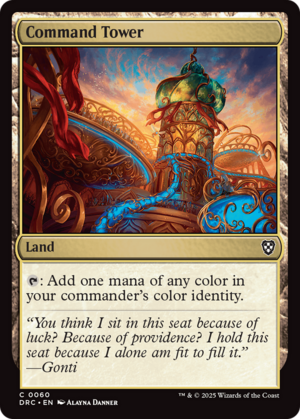
Command Tower #60 Land
Info
| Color: |  |
| Identifies: | |
| Cost: | |
| Rarity: | Common |
| Converted Cost: | 0 |
| Power/Toughness: | / |
| Types: | |
| SubTypes: | |
| Languages: | 
         |
| Layout: | Normal |
| Rank: | |
| Saltiness: |
Rules
Text
 : Add one mana of any color in your commander's color identity.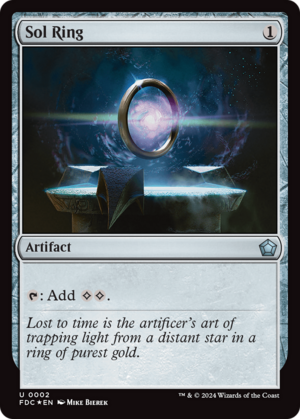
Card Details
Sol Ring #2 Artifact
Info
| Color: | |
| Identifies: | |
| Cost: |
 |
| Rarity: | Uncommon |
| Converted Cost: | 1 |
| Power/Toughness: | / |
| Types: | |
| SubTypes: | |
| Languages: |
|
| Layout: | Normal |
| Rank: | |
| Saltiness: |
Rules
Text
: Add . 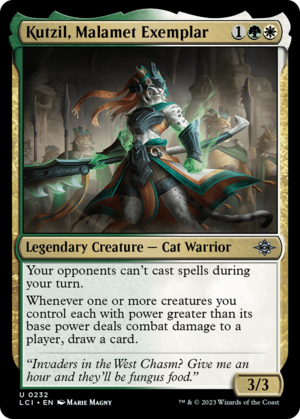
Card Details
Kutzil, Malamet Exemplar #232 Legendary Creature — Cat Warrior
Info
| Color: |   |
| Identifies: | |
| Cost: |
  |
| Rarity: | Uncommon |
| Converted Cost: | 3 |
| Power/Toughness: | 3/3 |
| Types: | |
| SubTypes: | |
| Languages: |
|
| Layout: | Normal |
| Rank: | |
| Saltiness: |
Rules
Prices
Legalities
Brawl
Paupercommander
Predh
Standardbrawl
Vintage
Gladiator
Premodern
Oathbreaker
Duel
Pauper
Modern
Alchemy
Future
Timeless
Historic
Oldschool
Penny
Commander
Legacy
Standard
Pioneer
Text
Your opponents can't cast spells during your turn. Whenever one or more creatures you control each with power greater than its base power deals combat damage to a player, draw a card.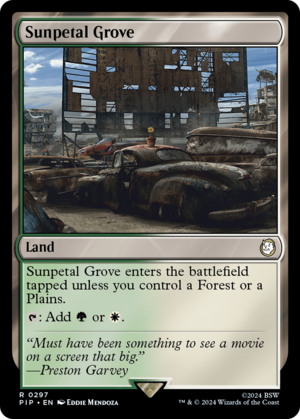
Card Details
Sunpetal Grove #297 Land
Info
| Color: | |
| Identifies: | |
| Cost: | |
| Rarity: | Rare |
| Converted Cost: | 0 |
| Power/Toughness: | / |
| Types: | |
| SubTypes: | |
| Languages: |
|
| Layout: | Normal |
| Rank: | |
| Saltiness: |
Rules
Prices
Legalities
Brawl
Paupercommander
Predh
Standardbrawl
Vintage
Gladiator
Premodern
Oathbreaker
Duel
Pauper
Modern
Alchemy
Future
Timeless
Historic
Oldschool
Penny
Commander
Legacy
Standard
Pioneer
Text
This land enters tapped unless you control a Forest or a Plains.: Add or . 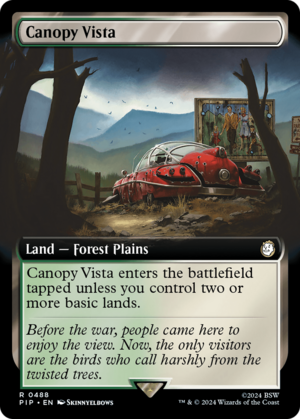
Card Details
Canopy Vista #488 Land — Forest Plains
Info
| Color: | |
| Identifies: | |
| Cost: | |
| Rarity: | Rare |
| Converted Cost: | 0 |
| Power/Toughness: | / |
| Types: | |
| SubTypes: | |
| Languages: |
|
| Layout: | Normal |
| Rank: | |
| Saltiness: |
Rules
Prices
Legalities
Brawl
Paupercommander
Predh
Standardbrawl
Vintage
Gladiator
Premodern
Oathbreaker
Duel
Pauper
Modern
Alchemy
Future
Timeless
Historic
Oldschool
Penny
Commander
Legacy
Standard
Pioneer
Text
(: Add or .)
This land enters tapped unless you control two or more basic lands. 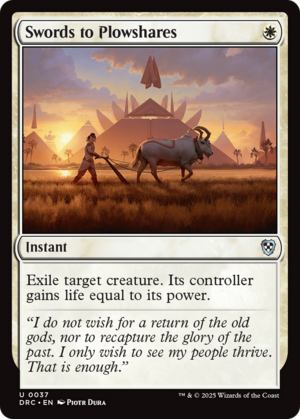
Card Details
Swords to Plowshares #37 Instant
Info
| Color: | |
| Identifies: | |
| Cost: |
|
| Rarity: | Uncommon |
| Converted Cost: | 1 |
| Power/Toughness: | / |
| Types: | |
| SubTypes: | |
| Languages: |
|
| Layout: | Normal |
| Rank: | |
| Saltiness: |
Rules
Text
Exile target creature. Its controller gains life equal to its power.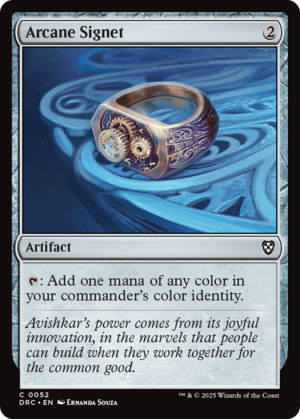
Card Details
Arcane Signet #52 Artifact
Info
| Color: | |
| Identifies: | |
| Cost: |
 |
| Rarity: | Common |
| Converted Cost: | 2 |
| Power/Toughness: | / |
| Types: | |
| SubTypes: | |
| Languages: |
|
| Layout: | Normal |
| Rank: | |
| Saltiness: |
Rules
Text
: Add one mana of any color in your commander's color identity. 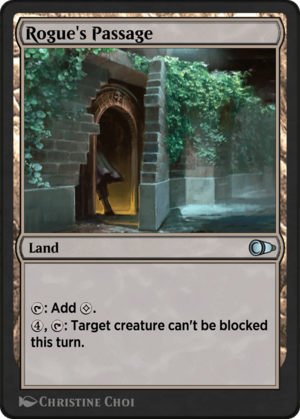
Card Details
Rogue's Passage #273 Land
Info
| Color: | |
| Identifies: | |
| Cost: | |
| Rarity: | Uncommon |
| Converted Cost: | 0 |
| Power/Toughness: | / |
| Types: | |
| SubTypes: | |
| Languages: |
|
| Layout: | Normal |
| Rank: | |
| Saltiness: |
Rules
Prices
| Seller | Price |
|---|
Legalities
Brawl
Paupercommander
Predh
Standardbrawl
Vintage
Gladiator
Premodern
Oathbreaker
Duel
Pauper
Modern
Alchemy
Future
Timeless
Historic
Oldschool
Penny
Commander
Legacy
Standard
Pioneer
Text
: Add .
 , : Target creature can't be blocked this turn.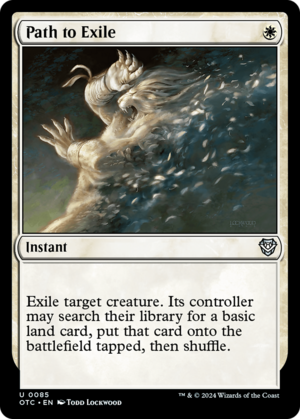
Card Details
Path to Exile #85 aka. Path Instant
Info
| Color: | |
| Identifies: | |
| Cost: |
|
| Rarity: | Uncommon |
| Converted Cost: | 1 |
| Power/Toughness: | / |
| Types: | |
| SubTypes: | |
| Languages: |
|
| Layout: | Normal |
| Rank: | |
| Saltiness: |
Rules
Text
Exile target creature. Its controller may search their library for a basic land card, put that card onto the battlefield tapped, thenshuffle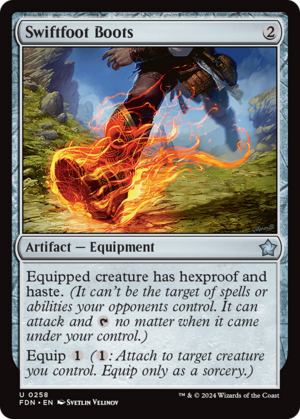
Card Details
Swiftfoot Boots #258 Artifact — Equipment
Info
| Color: | |
| Identifies: | |
| Cost: |
|
| Rarity: | Uncommon |
| Converted Cost: | 2 |
| Power/Toughness: | / |
| Types: | |
| SubTypes: | |
| Languages: |
|
| Layout: | Normal |
| Rank: | |
| Saltiness: |
Abilities/Keywords
Rules
Prices
Legalities
Brawl
Paupercommander
Predh
Standardbrawl
Vintage
Gladiator
Premodern
Oathbreaker
Duel
Pauper
Modern
Alchemy
Future
Timeless
Historic
Oldschool
Penny
Commander
Legacy
Standard
Pioneer
Text
Equipped creature has hexproof and haste. (It can't be the target of spells or abilities your opponents control. It can attack and no matter when it came under your control.)
Equip  (: Attach to target creature you control. Equip only as a sorcery.)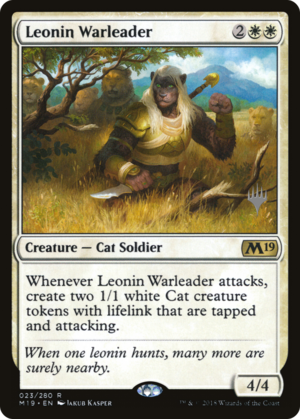
Card Details
Leonin Warleader #23p Creature — Cat Soldier
Info
| Color: | |
| Identifies: | |
| Cost: |
|
| Rarity: | Rare |
| Converted Cost: | 4 |
| Power/Toughness: | 4/4 |
| Types: | |
| SubTypes: | |
| Languages: |
|
| Layout: | Normal |
| Rank: | |
| Saltiness: | |
| Tokens: |
Rules
Prices
Legalities
Brawl
Paupercommander
Predh
Standardbrawl
Vintage
Gladiator
Premodern
Oathbreaker
Duel
Pauper
Modern
Alchemy
Future
Timeless
Historic
Oldschool
Penny
Commander
Legacy
Standard
Pioneer
Text
Whenever this creature attacks, create two 1/1 white Cat creature tokens with lifelink that are tapped and attacking.
Card Details
Temple Garden #281 Land — Forest Plains
Info
| Color: | |
| Identifies: | |
| Cost: | |
| Rarity: | Rare |
| Converted Cost: | 0 |
| Power/Toughness: | / |
| Types: | |
| SubTypes: | |
| Languages: |
|
| Layout: | Normal |
| Rank: | |
| Saltiness: |
Rules
Prices
Legalities
Brawl
Paupercommander
Predh
Standardbrawl
Vintage
Gladiator
Premodern
Oathbreaker
Duel
Pauper
Modern
Alchemy
Future
Timeless
Historic
Oldschool
Penny
Commander
Legacy
Standard
Pioneer
Text
(: Add or .)
As this land enters, you may pay 2 life. If you don't, it enters tapped. 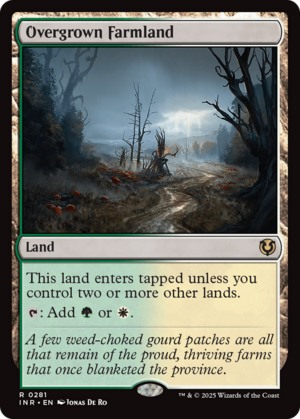
Card Details
Overgrown Farmland #281 Land
Info
| Color: | |
| Identifies: | |
| Cost: | |
| Rarity: | Rare |
| Converted Cost: | 0 |
| Power/Toughness: | / |
| Types: | |
| SubTypes: | |
| Languages: |
|
| Layout: | Normal |
| Rank: | |
| Saltiness: |
Rules
Prices
Legalities
Brawl
Paupercommander
Predh
Standardbrawl
Vintage
Gladiator
Premodern
Oathbreaker
Duel
Pauper
Modern
Alchemy
Future
Timeless
Historic
Oldschool
Penny
Commander
Legacy
Standard
Pioneer
Text
This land enters tapped unless you control two or more other lands.: Add or . 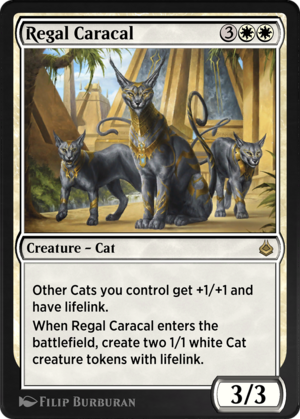
Card Details
Regal Caracal #339 Creature — Cat
Info
| Color: | |
| Identifies: | |
| Cost: |
 |
| Rarity: | Rare |
| Converted Cost: | 5 |
| Power/Toughness: | 3/3 |
| Types: | |
| SubTypes: | |
| Languages: |
|
| Layout: | Normal |
| Rank: | |
| Saltiness: | |
| Tokens: |
Rules
Prices
| Seller | Price |
|---|
Legalities
Brawl
Paupercommander
Predh
Standardbrawl
Vintage
Gladiator
Premodern
Oathbreaker
Duel
Pauper
Modern
Alchemy
Future
Timeless
Historic
Oldschool
Penny
Commander
Legacy
Standard
Pioneer
Text
Other Cats you control get +1/+1 and have lifelink. (Damage dealt by those creatures also causes you to gain that much life.) When this creature enters, create two 1/1 white Cat creature tokens with lifelink.Less Synergy

Card Details
Arahbo, the First Fang #2s Legendary Creature — Cat Avatar
Info
| Color: | |
| Identifies: | |
| Cost: |
|
| Rarity: | Rare |
| Converted Cost: | 3 |
| Power/Toughness: | 2/2 |
| Types: | |
| SubTypes: | |
| Languages: |
|
| Layout: | Normal |
| Rank: | |
| Saltiness: | |
| Tokens: |
Rules
Text
Other Cats you control get +1/+1. Whenever Arahbo or another nontoken Cat you control enters, create a 1/1 white Cat creature token.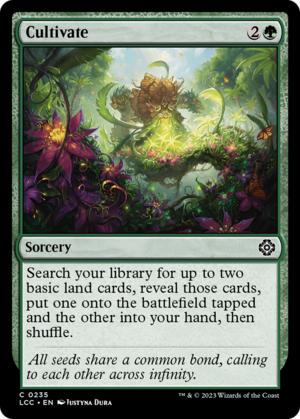
Card Details
Cultivate #235 Sorcery
Info
| Color: | |
| Identifies: | |
| Cost: |
|
| Rarity: | Common |
| Converted Cost: | 3 |
| Power/Toughness: | / |
| Types: | |
| SubTypes: | |
| Languages: |
|
| Layout: | Normal |
| Rank: | |
| Saltiness: |
Rules
Text
Search your library for up to two basic land cards, reveal those cards, put one onto the battlefield tapped and the other into your hand, thenshuffle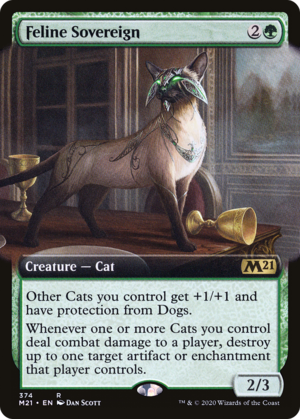
Card Details
Feline Sovereign #374 Creature — Cat
Info
| Color: | |
| Identifies: | |
| Cost: |
|
| Rarity: | Rare |
| Converted Cost: | 3 |
| Power/Toughness: | 2/3 |
| Types: | |
| SubTypes: | |
| Languages: |
|
| Layout: | Normal |
| Rank: | |
| Saltiness: |
Rules
Prices
Legalities
Brawl
Paupercommander
Predh
Standardbrawl
Vintage
Gladiator
Premodern
Oathbreaker
Duel
Pauper
Modern
Alchemy
Future
Timeless
Historic
Oldschool
Penny
Commander
Legacy
Standard
Pioneer
Text
Other Cats you control get +1/+1 and have protection from Dogs. Whenever one or more Cats you control deal combat damage to a player,destroyup to one target artifact or enchantment that player controls.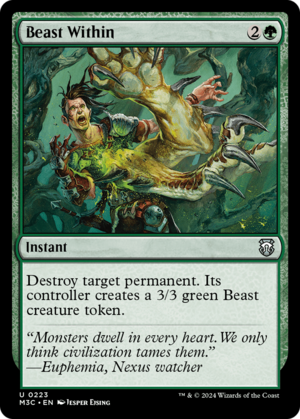
Card Details
Beast Within #223 Instant
Info
| Color: | |
| Identifies: | |
| Cost: |
|
| Rarity: | Uncommon |
| Converted Cost: | 3 |
| Power/Toughness: | / |
| Types: | |
| SubTypes: | |
| Languages: |
|
| Layout: | Normal |
| Rank: | |
| Saltiness: | |
| Tokens: |
Rules
Prices
Legalities
Brawl
Paupercommander
Predh
Standardbrawl
Vintage
Gladiator
Premodern
Oathbreaker
Duel
Pauper
Modern
Alchemy
Future
Timeless
Historic
Oldschool
Penny
Commander
Legacy
Standard
Pioneer
Text
Destroy target permanent. Its controller creates a 3/3 green Beast creature token.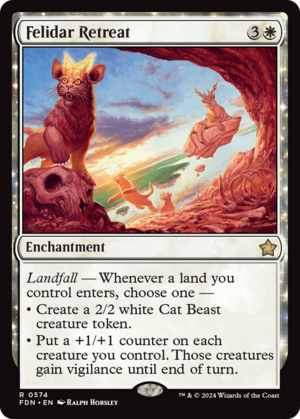
Card Details
Felidar Retreat #574 Enchantment
Info
| Color: | |
| Identifies: | |
| Cost: |
|
| Rarity: | Rare |
| Converted Cost: | 4 |
| Power/Toughness: | / |
| Types: | |
| SubTypes: | |
| Languages: |
|
| Layout: | Normal |
| Rank: | |
| Saltiness: | |
| Tokens: |
Abilities/Keywords
Rules
Text
Landfall — Whenever a land you control enters, choose one — • Create a 2/2 white Cat Beast creature token. • Put a +1/+1counteron each creature you control. Those creatures gain vigilance until end of turn.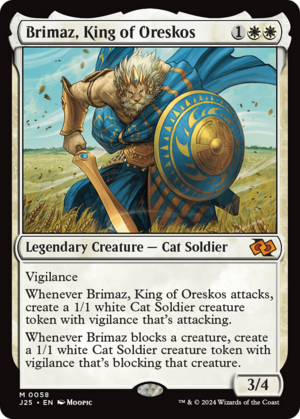
Card Details
Brimaz, King of Oreskos #58 Legendary Creature — Cat Soldier
Info
| Color: | |
| Identifies: | |
| Cost: |
|
| Rarity: | Mythic |
| Converted Cost: | 3 |
| Power/Toughness: | 3/4 |
| Types: | |
| SubTypes: | |
| Languages: |
|
| Layout: | Normal |
| Rank: | |
| Saltiness: | |
| Tokens: |
Abilities/Keywords
Rules
Text
Vigilance Whenever Brimaz attacks, create a 1/1 white Cat Soldier creature token with vigilance that's attacking. Whenever Brimaz blocks a creature, create a 1/1 white Cat Soldier creature token with vigilance that's blocking that creature.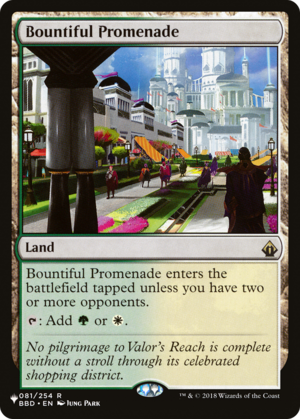
Card Details
Bountiful Promenade #BBD-81 Land
Info
| Color: | |
| Identifies: | |
| Cost: | |
| Rarity: | Rare |
| Converted Cost: | 0 |
| Power/Toughness: | / |
| Types: | |
| SubTypes: | |
| Languages: |
|
| Layout: | Normal |
| Rank: | |
| Saltiness: |
Rules
Text
This land enters tapped unless you have two or more opponents.: Add or . 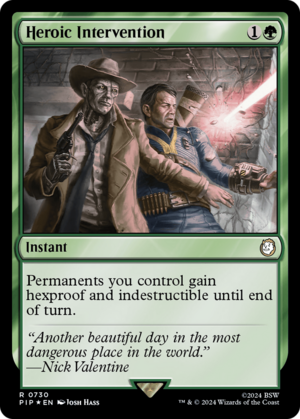
Card Details
Heroic Intervention #730 Instant
Info
| Color: | |
| Identifies: | |
| Cost: |
|
| Rarity: | Rare |
| Converted Cost: | 2 |
| Power/Toughness: | / |
| Types: | |
| SubTypes: | |
| Languages: |
|
| Layout: | Normal |
| Rank: | |
| Saltiness: |
Rules
Text
Permanents you control gain hexproof and indestructible until end of turn.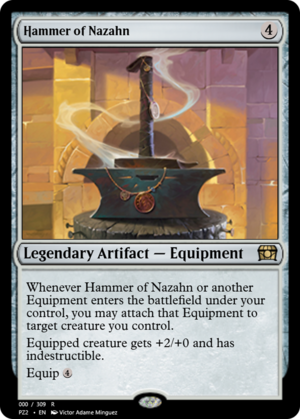
Card Details
Hammer of Nazahn #65669 Legendary Artifact — Equipment
Info
| Color: | |
| Identifies: | |
| Cost: |
 |
| Rarity: | Rare |
| Converted Cost: | 4 |
| Power/Toughness: | / |
| Types: | |
| SubTypes: | |
| Languages: |
|
| Layout: | Normal |
| Rank: | |
| Saltiness: |
Abilities/Keywords
Rules
Prices
| Seller | Price |
|---|
Legalities
Brawl
Paupercommander
Predh
Standardbrawl
Vintage
Gladiator
Premodern
Oathbreaker
Duel
Pauper
Modern
Alchemy
Future
Timeless
Historic
Oldschool
Penny
Commander
Legacy
Standard
Pioneer
Text
Whenever Hammer of Nazahn or another Equipment you control enters, you may attach that Equipment to target creature you control. Equipped creature gets +2/+0 and has indestructible. Equip 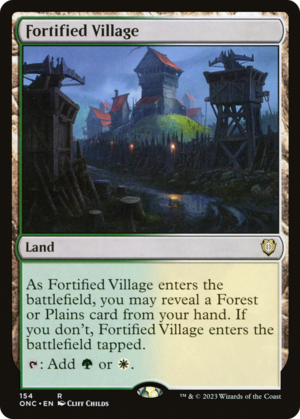
Card Details
Fortified Village #154 Land
Info
| Color: | |
| Identifies: | |
| Cost: | |
| Rarity: | Rare |
| Converted Cost: | 0 |
| Power/Toughness: | / |
| Types: | |
| SubTypes: | |
| Languages: |
|
| Layout: | Normal |
| Rank: | |
| Saltiness: |
Rules
Text
As this land enters, you may reveal a Forest or Plains card from your hand. If you don't, this land enters tapped.: Add or . 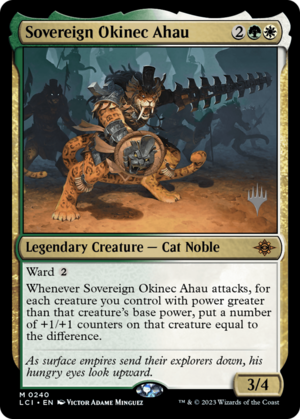
Card Details
Sovereign Okinec Ahau #240p Legendary Creature — Cat Noble
Info
| Color: | |
| Identifies: | |
| Cost: |
|
| Rarity: | Mythic |
| Converted Cost: | 4 |
| Power/Toughness: | 3/4 |
| Types: | |
| SubTypes: | |
| Languages: |
|
| Layout: | Normal |
| Rank: | |
| Saltiness: |
Abilities/Keywords
Rules
Prices
Legalities
Brawl
Paupercommander
Predh
Standardbrawl
Vintage
Gladiator
Premodern
Oathbreaker
Duel
Pauper
Modern
Alchemy
Future
Timeless
Historic
Oldschool
Penny
Commander
Legacy
Standard
Pioneer
Text
Ward Whenever Sovereign Okinec Ahau attacks, for each creature you control with power greater than that creature's base power, put a number of +1/+1 counters on that creature equal to the difference.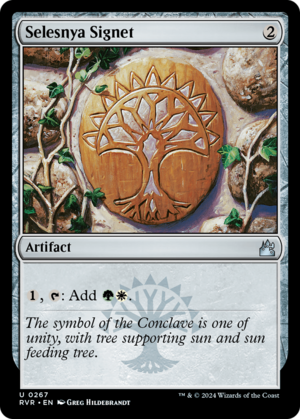
Card Details
Selesnya Signet #267 Artifact
Info
| Color: | |
| Identifies: | |
| Cost: |
|
| Rarity: | Uncommon |
| Converted Cost: | 2 |
| Power/Toughness: | / |
| Types: | |
| SubTypes: | |
| Languages: |
|
| Layout: | Normal |
| Rank: | |
| Saltiness: |
Rules
Prices
Legalities
Brawl
Paupercommander
Predh
Standardbrawl
Vintage
Gladiator
Premodern
Oathbreaker
Duel
Pauper
Modern
Alchemy
Future
Timeless
Historic
Oldschool
Penny
Commander
Legacy
Standard
Pioneer
Text
, : Add . 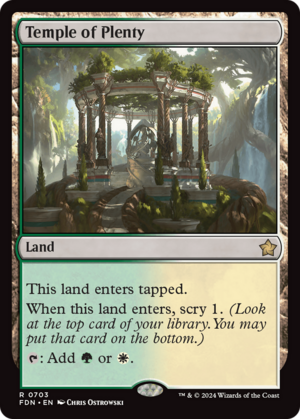
Card Details
Temple of Plenty #703 Land
Info
| Color: | |
| Identifies: | |
| Cost: | |
| Rarity: | Rare |
| Converted Cost: | 0 |
| Power/Toughness: | / |
| Types: | |
| SubTypes: | |
| Languages: |
|
| Layout: | Normal |
| Rank: | |
| Saltiness: |
Abilities/Keywords
Rules
Text
This land enters tapped. When this land enters, scry 1. (Look at the top card of your library. You may put that card on the bottom.): Add or . 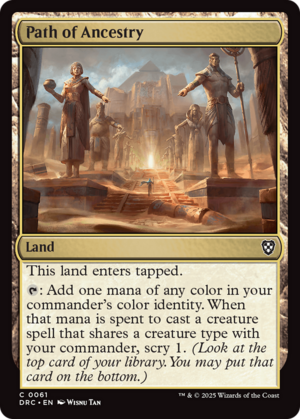
Card Details
Path of Ancestry #61 Land
Info
| Color: | |
| Identifies: | |
| Cost: | |
| Rarity: | Common |
| Converted Cost: | 0 |
| Power/Toughness: | / |
| Types: | |
| SubTypes: | |
| Languages: |
|
| Layout: | Normal |
| Rank: | |
| Saltiness: |
Abilities/Keywords
Rules
Text
This land enters tapped.: Add one mana of any color in your commander's color identity. When that mana is spent to cast a creature spell that shares a creature type with your commander, scry 1. (Look at the top card of your library. You may put that card on the bottom.) 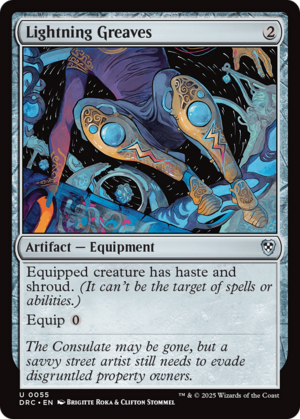
Card Details
Lightning Greaves #55 Artifact — Equipment
Info
| Color: | |
| Identifies: | |
| Cost: |
|
| Rarity: | Uncommon |
| Converted Cost: | 2 |
| Power/Toughness: | / |
| Types: | |
| SubTypes: | |
| Languages: |
|
| Layout: | Normal |
| Rank: | |
| Saltiness: |
Abilities/Keywords
Rules
Text
Equipped creature has haste and shroud. (It can't be the target of spells or abilities.) Equip
Card Details
Pride Sovereign #208 Creature — Cat
Info
| Color: | |
| Identifies: | |
| Cost: |
|
| Rarity: | Rare |
| Converted Cost: | 3 |
| Power/Toughness: | 2/2 |
| Types: | |
| SubTypes: | |
| Languages: |
|
| Layout: | Normal |
| Rank: | |
| Saltiness: | |
| Tokens: |
Abilities/Keywords
Rules
Prices
| Seller | Price |
|---|
Legalities
Brawl
Paupercommander
Predh
Standardbrawl
Vintage
Gladiator
Premodern
Oathbreaker
Duel
Pauper
Modern
Alchemy
Future
Timeless
Historic
Oldschool
Penny
Commander
Legacy
Standard
Pioneer
Text
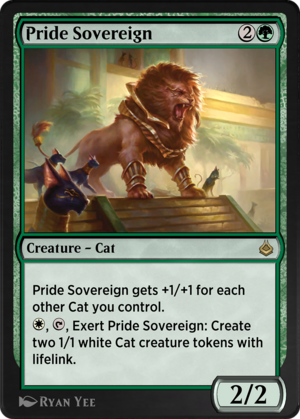
This creature gets +1/+1 for each other Cat you control., , Exert this creature: Create two 1/1 white Cat creature tokens with lifelink. (An exerted creature won't untap during your next untap step.) 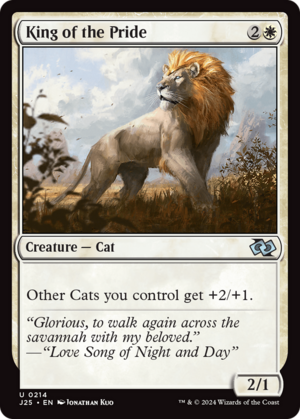
Card Details
King of the Pride #214 Creature — Cat
Info
| Color: | |
| Identifies: | |
| Cost: |
|
| Rarity: | Uncommon |
| Converted Cost: | 3 |
| Power/Toughness: | 2/1 |
| Types: | |
| SubTypes: | |
| Languages: |
|
| Layout: | Normal |
| Rank: | |
| Saltiness: |
Rules
Text
Other Cats you control get +2/+1.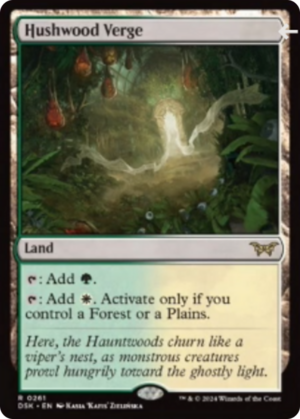
Card Details
Hushwood Verge #261 Land
Info
| Color: | |
| Identifies: | |
| Cost: | |
| Rarity: | Rare |
| Converted Cost: | 0 |
| Power/Toughness: | / |
| Types: | |
| SubTypes: | |
| Languages: |
|
| Layout: | Normal |
| Rank: | |
| Saltiness: |
Rules
Prices
Legalities
Brawl
Paupercommander
Predh
Standardbrawl
Vintage
Gladiator
Premodern
Oathbreaker
Duel
Pauper
Modern
Alchemy
Future
Timeless
Historic
Oldschool
Penny
Commander
Legacy
Standard
Pioneer
Text
: Add .
: Add . Activate only if you control a Forest or a Plains. 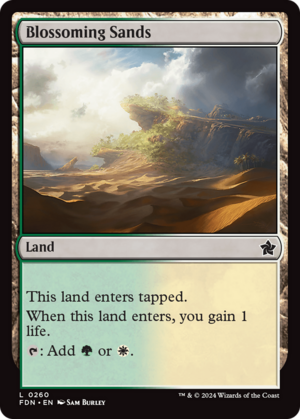
Card Details
Blossoming Sands #260 Land
Info
| Color: | |
| Identifies: | |
| Cost: | |
| Rarity: | Common |
| Converted Cost: | 0 |
| Power/Toughness: | / |
| Types: | |
| SubTypes: | |
| Languages: |
|
| Layout: | Normal |
| Rank: | |
| Saltiness: |
Rules
Prices
Legalities
Brawl
Paupercommander
Predh
Standardbrawl
Vintage
Gladiator
Premodern
Oathbreaker
Duel
Pauper
Modern
Alchemy
Future
Timeless
Historic
Oldschool
Penny
Commander
Legacy
Standard
Pioneer
Text
This land enters tapped. When this land enters, you gain 1 life.: Add or . 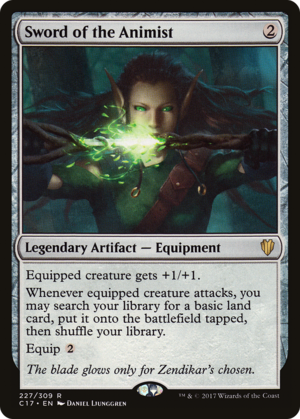
Card Details
Sword of the Animist #227 Legendary Artifact — Equipment
Info
| Color: | |
| Identifies: | |
| Cost: |
|
| Rarity: | Rare |
| Converted Cost: | 2 |
| Power/Toughness: | / |
| Types: | |
| SubTypes: | |
| Languages: |
|
| Layout: | Normal |
| Rank: | |
| Saltiness: |
Abilities/Keywords
Rules
Text
Equipped creature gets +1/+1. Whenever equipped creature attacks, you may search your library for a basic land card, put it onto the battlefield tapped, thenshuffle Equip 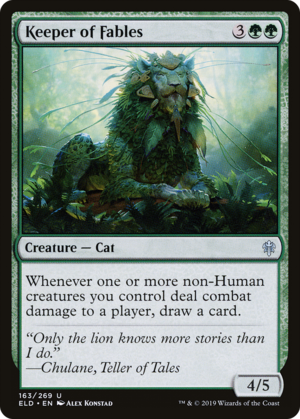
Card Details
Keeper of Fables #163 Creature — Cat
Info
| Color: | |
| Identifies: | |
| Cost: |
|
| Rarity: | Uncommon |
| Converted Cost: | 5 |
| Power/Toughness: | 4/5 |
| Types: | |
| SubTypes: | |
| Languages: |
|
| Layout: | Normal |
| Rank: | |
| Saltiness: |
Rules
Prices
Legalities
Brawl
Paupercommander
Predh
Standardbrawl
Vintage
Gladiator
Premodern
Oathbreaker
Duel
Pauper
Modern
Alchemy
Future
Timeless
Historic
Oldschool
Penny
Commander
Legacy
Standard
Pioneer
Text
Whenever one or more non-Human creatures you control deal combat damage to a player, draw a card.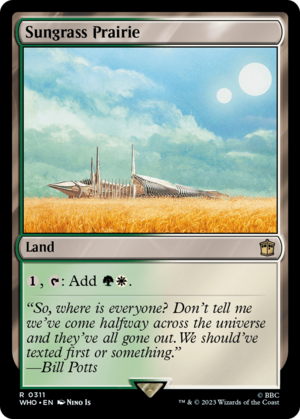
Card Details
Sungrass Prairie #311 Land
Info
| Color: | |
| Identifies: | |
| Cost: | |
| Rarity: | Rare |
| Converted Cost: | 0 |
| Power/Toughness: | / |
| Types: | |
| SubTypes: | |
| Languages: |
|
| Layout: | Normal |
| Rank: | |
| Saltiness: |
Rules
Prices
Legalities
Brawl
Paupercommander
Predh
Standardbrawl
Vintage
Gladiator
Premodern
Oathbreaker
Duel
Pauper
Modern
Alchemy
Future
Timeless
Historic
Oldschool
Penny
Commander
Legacy
Standard
Pioneer
Text
, : Add . 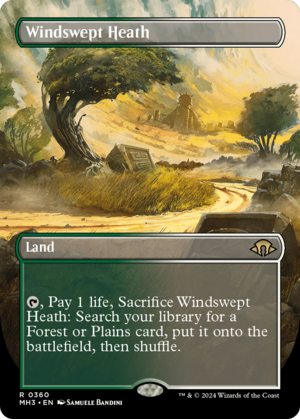
Card Details
Windswept Heath #360 Land
Info
| Color: | |
| Identifies: | |
| Cost: | |
| Rarity: | Rare |
| Converted Cost: | 0 |
| Power/Toughness: | / |
| Types: | |
| SubTypes: | |
| Languages: |
|
| Layout: | Normal |
| Rank: | |
| Saltiness: |
Rules
Prices
Legalities
Brawl
Paupercommander
Predh
Standardbrawl
Vintage
Gladiator
Premodern
Oathbreaker
Duel
Pauper
Modern
Alchemy
Future
Timeless
Historic
Oldschool
Penny
Commander
Legacy
Standard
Pioneer
Text
, Pay 1 life,Sacrificethis land: Search your library for a Forest or Plains card, put it onto the battlefield, thenshuffle 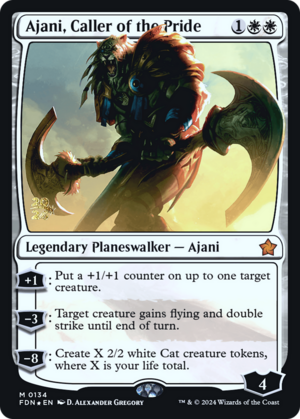
Card Details
Ajani, Caller of the Pride #134s Legendary Planeswalker — Ajani
Info
| Color: | |
| Identifies: | |
| Cost: |
|
| Rarity: | Mythic |
| Converted Cost: | 3 |
| Power/Toughness: | / |
| Types: | |
| SubTypes: | |
| Languages: |
|
| Layout: | Normal |
| Rank: | |
| Saltiness: | |
| Tokens: |
Rules
Text
+1 Put a +1/+1counteron up to one target creature.
−3 Target creature gains flying and double strike until end of turn.
−8 Create X 2/2 white Cat creature tokens, where X is your life total.
Card Details
Branchloft Pathway (Branchloft Pathway // Boulderloft Pathway) #13 Land
Info
| Color: | |
| Identifies: | |
| Cost: | |
| Rarity: | Rare |
| Converted Cost: | 0 |
| Power/Toughness: | / |
| Types: | |
| SubTypes: | |
| Languages: |
|
| Layout: | Modal Dfc |
| Rank: | |
| Saltiness: |
Rules
Text
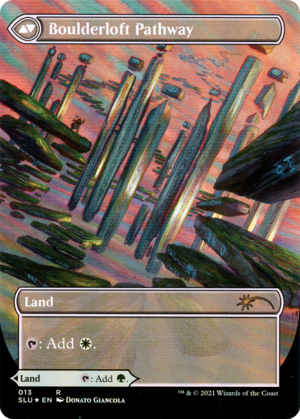
: Add . Boulderloft Pathway (Branchloft Pathway // Boulderloft Pathway) #13 Land
Info
| Color: | |
| Identifies: | |
| Cost: | |
| Rarity: | Rare |
| Converted Cost: | 0 |
| Power/Toughness: | / |
| Types: | |
| SubTypes: | |
| Languages: |
|
| Layout: | Modal Dfc |
| Rank: | |
| Saltiness: |
Rules
Text
: Add . 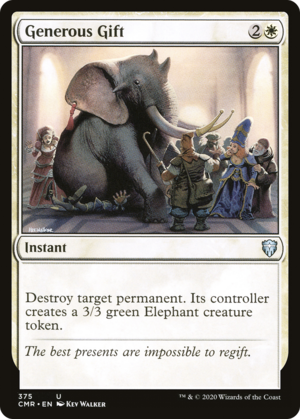
Card Details
Generous Gift #375 Instant
Info
| Color: | |
| Identifies: | |
| Cost: |
|
| Rarity: | Uncommon |
| Converted Cost: | 3 |
| Power/Toughness: | / |
| Types: | |
| SubTypes: | |
| Languages: |
|
| Layout: | Normal |
| Rank: | |
| Saltiness: | |
| Tokens: |
Rules
Text
Destroy target permanent. Its controller creates a 3/3 green Elephant creature token.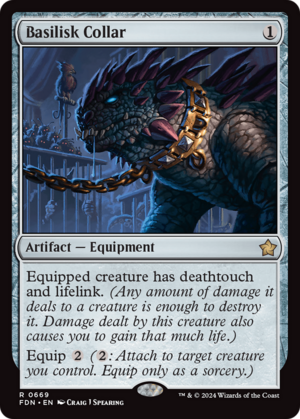
Card Details
Basilisk Collar #669 Artifact — Equipment
Info
| Color: | |
| Identifies: | |
| Cost: |
|
| Rarity: | Rare |
| Converted Cost: | 1 |
| Power/Toughness: | / |
| Types: | |
| SubTypes: | |
| Languages: |
|
| Layout: | Normal |
| Rank: | |
| Saltiness: |
Abilities/Keywords
Rules
Text
Equipped creature has deathtouch and lifelink. (Any amount of damage it deals to a creature is enough todestroyit. Damage dealt by this creature also causes you to gain that much life.) Equip (: Attach to target creature you control. Equip only as a sorcery.) 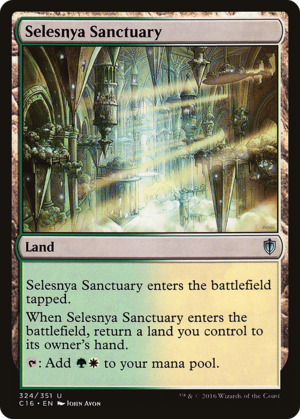
Card Details
Selesnya Sanctuary #324 Land
Info
| Color: | |
| Identifies: | |
| Cost: | |
| Rarity: | Uncommon |
| Converted Cost: | 0 |
| Power/Toughness: | / |
| Types: | |
| SubTypes: | |
| Languages: |
|
| Layout: | Normal |
| Rank: | |
| Saltiness: |
Rules
Text
This land enters tapped. When this land enters, return a land you control to its owner's hand.: Add . 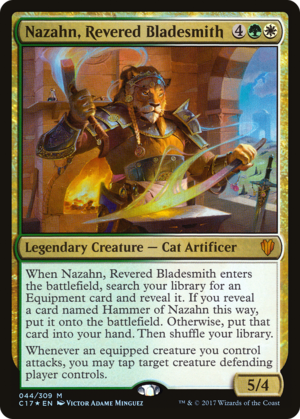
Card Details
Nazahn, Revered Bladesmith #44 Legendary Creature — Cat Artificer
Info
| Color: | |
| Identifies: | |
| Cost: |
|
| Rarity: | Mythic |
| Converted Cost: | 6 |
| Power/Toughness: | 5/4 |
| Types: | |
| SubTypes: | |
| Languages: |
|
| Layout: | Normal |
| Rank: | |
| Saltiness: |
Rules
Text
When Nazahn enters, search your library for an Equipment card and reveal it. If you reveal a card named Hammer of Nazahn this way, put it onto the battlefield. Otherwise, put that card into your hand. Thenshuffle Whenever an equipped creature you control attacks, you may tap target creature defending player controls.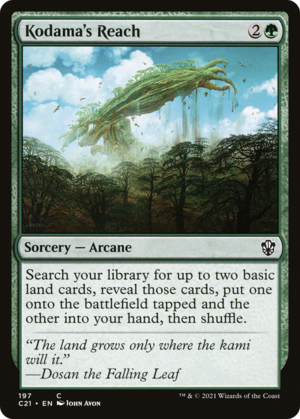
Card Details
Kodama's Reach #197 Sorcery — Arcane
Info
| Color: | |
| Identifies: | |
| Cost: |
|
| Rarity: | Common |
| Converted Cost: | 3 |
| Power/Toughness: | / |
| Types: | |
| SubTypes: | |
| Languages: |
|
| Layout: | Normal |
| Rank: | |
| Saltiness: |
Rules
Text
Search your library for up to two basic land cards, reveal those cards, put one onto the battlefield tapped and the other into your hand, thenshuffle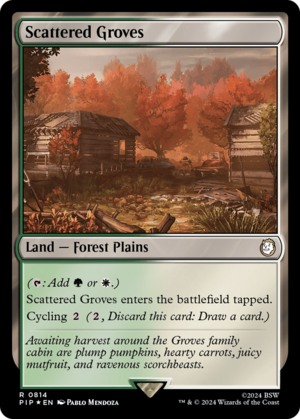
Card Details
Scattered Groves #814 Land — Forest Plains
Info
| Color: | |
| Identifies: | |
| Cost: | |
| Rarity: | Rare |
| Converted Cost: | 0 |
| Power/Toughness: | / |
| Types: | |
| SubTypes: | |
| Languages: |
|
| Layout: | Normal |
| Rank: | |
| Saltiness: |
Abilities/Keywords
Rules
Text
(: Add or .)
This land enters tapped.
Cycling (,Discardthis card: Draw a card.) 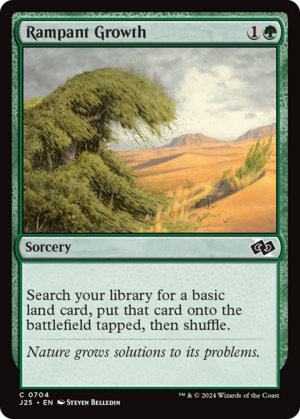
Card Details
Rampant Growth #704 Sorcery
Info
| Color: | |
| Identifies: | |
| Cost: |
|
| Rarity: | Common |
| Converted Cost: | 2 |
| Power/Toughness: | / |
| Types: | |
| SubTypes: | |
| Languages: |
|
| Layout: | Normal |
| Rank: | |
| Saltiness: |
Rules
Text
Search your library for a basic land card, put that card onto the battlefield tapped, thenshuffle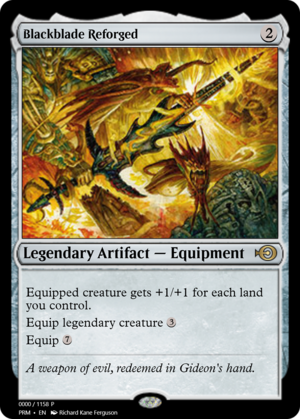
Card Details
Blackblade Reforged #77949 Legendary Artifact — Equipment
Info
| Color: | |
| Identifies: | |
| Cost: |
|
| Rarity: | Rare |
| Converted Cost: | 2 |
| Power/Toughness: | / |
| Types: | |
| SubTypes: | |
| Languages: |
|
| Layout: | Normal |
| Rank: | |
| Saltiness: |
Abilities/Keywords
Rules
Prices
| Seller | Price |
|---|
Legalities
Brawl
Paupercommander
Predh
Standardbrawl
Vintage
Gladiator
Premodern
Oathbreaker
Duel
Pauper
Modern
Alchemy
Future
Timeless
Historic
Oldschool
Penny
Commander
Legacy
Standard
Pioneer
Text
Equipped creature gets +1/+1 for each land you control. Equip legendary creature Equip
Equip 
Card Details
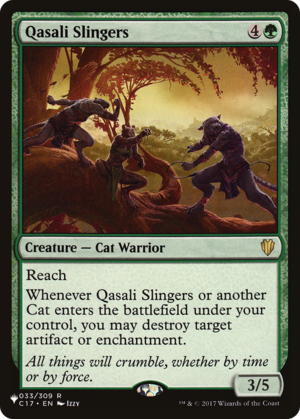
Qasali Slingers #C17-33 Creature — Cat Warrior
Info
| Color: | |
| Identifies: | |
| Cost: |
|
| Rarity: | Rare |
| Converted Cost: | 5 |
| Power/Toughness: | 3/5 |
| Types: | |
| SubTypes: | |
| Languages: |
|
| Layout: | Normal |
| Rank: | |
| Saltiness: |
Abilities/Keywords
Rules
Text
Reach Whenever this creature or another Cat you control enters, you maydestroytarget artifact or enchantment.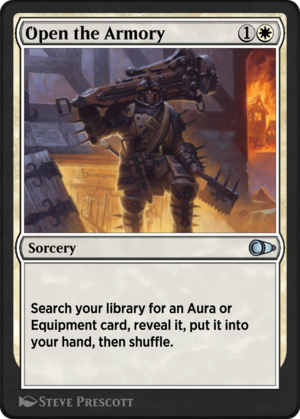
Card Details
Open the Armory #360 Sorcery
Info
| Color: | |
| Identifies: | |
| Cost: |
|
| Rarity: | Uncommon |
| Converted Cost: | 2 |
| Power/Toughness: | / |
| Types: | |
| SubTypes: | |
| Languages: |
|
| Layout: | Normal |
| Rank: | |
| Saltiness: |
Rules
Prices
| Seller | Price |
|---|
Legalities
Brawl
Paupercommander
Predh
Standardbrawl
Vintage
Gladiator
Premodern
Oathbreaker
Duel
Pauper
Modern
Alchemy
Future
Timeless
Historic
Oldschool
Penny
Commander
Legacy
Standard
Pioneer
Text
Search your library for an Aura or Equipment card, reveal it, put it into your hand, thenshuffle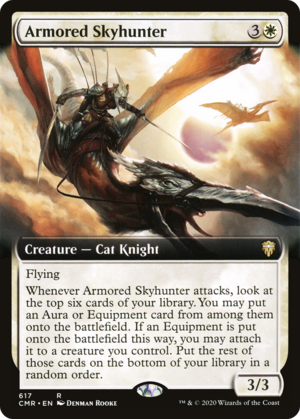
Card Details
Armored Skyhunter #617 Creature — Cat Knight
Info
| Color: | |
| Identifies: | |
| Cost: |
|
| Rarity: | Rare |
| Converted Cost: | 4 |
| Power/Toughness: | 3/3 |
| Types: | |
| SubTypes: | |
| Languages: |
|
| Layout: | Normal |
| Rank: | |
| Saltiness: |
Abilities/Keywords
Rules
Prices
Legalities
Brawl
Paupercommander
Predh
Standardbrawl
Vintage
Gladiator
Premodern
Oathbreaker
Duel
Pauper
Modern
Alchemy
Future
Timeless
Historic
Oldschool
Penny
Commander
Legacy
Standard
Pioneer
Text
Flying Whenever this creature attacks, look at the top six cards of your library. You may put an Aura or Equipment card from among them onto the battlefield. If an Equipment is put onto the battlefield this way, you may attach it to a creature you control. Put the rest of those cards on the bottom of your library in a random order.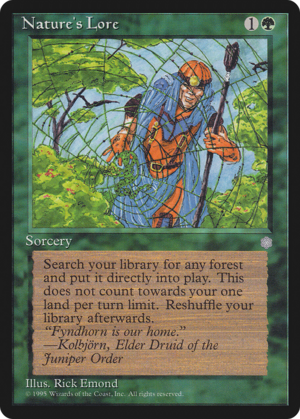
Card Details
Nature's Lore #255 Sorcery
Info
| Color: | |
| Identifies: | |
| Cost: |
|
| Rarity: | Uncommon |
| Converted Cost: | 2 |
| Power/Toughness: | / |
| Types: | |
| SubTypes: | |
| Languages: |
|
| Layout: | Normal |
| Rank: | |
| Saltiness: |
Rules
Text
Search your library for a Forest card, put that card onto the battlefield, thenshuffle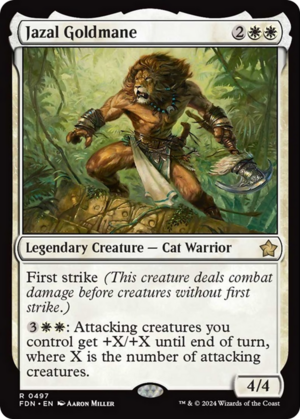
Card Details
Jazal Goldmane #497 Legendary Creature — Cat Warrior
Info
| Color: | |
| Identifies: | |
| Cost: |
|
| Rarity: | Rare |
| Converted Cost: | 4 |
| Power/Toughness: | 4/4 |
| Types: | |
| SubTypes: | |
| Languages: |
|
| Layout: | Normal |
| Rank: | |
| Saltiness: |
Abilities/Keywords
Rules
Text
First strike (This creature deals combat damage before creatures without first strike.): Attacking creatures you control get +X/+X until end of turn, where X is the number of attacking creatures. 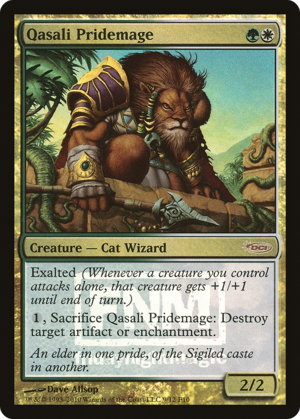
Card Details
Qasali Pridemage #9 Creature — Cat Wizard
Info
| Color: | |
| Identifies: | |
| Cost: |
|
| Rarity: | Rare |
| Converted Cost: | 2 |
| Power/Toughness: | 2/2 |
| Types: | |
| SubTypes: | |
| Languages: |
|
| Layout: | Normal |
| Rank: | |
| Saltiness: |
Abilities/Keywords
Rules
Text
Exalted (Whenever a creature you control attacks alone, that creature gets +1/+1 until end of turn.),Sacrificethis creature:Destroytarget artifact or enchantment. 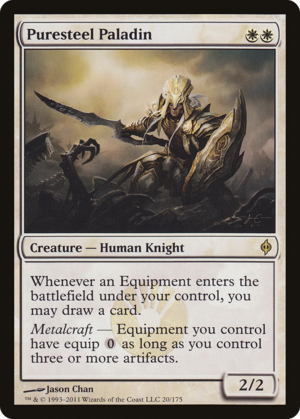
Card Details
Puresteel Paladin #20 Creature — Human Knight
Info
| Color: | |
| Identifies: | |
| Cost: |
|
| Rarity: | Rare |
| Converted Cost: | 2 |
| Power/Toughness: | 2/2 |
| Types: | |
| SubTypes: | |
| Languages: |
|
| Layout: | Normal |
| Rank: | |
| Saltiness: |
Abilities/Keywords
Rules
Prices
Legalities
Brawl
Paupercommander
Predh
Standardbrawl
Vintage
Gladiator
Premodern
Oathbreaker
Duel
Pauper
Modern
Alchemy
Future
Timeless
Historic
Oldschool
Penny
Commander
Legacy
Standard
Pioneer
Text
Whenever an Equipment you control enters, you may draw a card. Metalcraft — Equipment you control have equip as long as you control three or more artifacts. 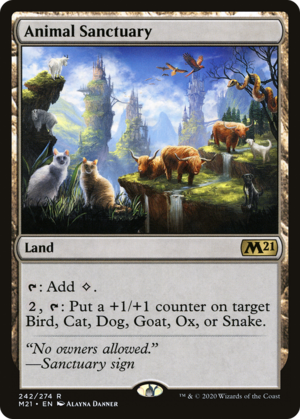
Card Details
Animal Sanctuary #242 Land
Info
| Color: | |
| Identifies: | |
| Cost: | |
| Rarity: | Rare |
| Converted Cost: | 0 |
| Power/Toughness: | / |
| Types: | |
| SubTypes: | |
| Languages: |
|
| Layout: | Normal |
| Rank: | |
| Saltiness: |
Rules
Prices
Legalities
Brawl
Paupercommander
Predh
Standardbrawl
Vintage
Gladiator
Premodern
Oathbreaker
Duel
Pauper
Modern
Alchemy
Future
Timeless
Historic
Oldschool
Penny
Commander
Legacy
Standard
Pioneer
Text
: Add .
, : Put a +1/+1counteron target Bird, Cat, Dog, Goat, Ox, or Snake. 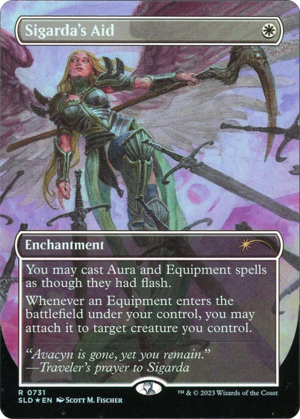
Card Details
Sigarda's Aid #731 Enchantment
Info
| Color: | |
| Identifies: | |
| Cost: |
|
| Rarity: | Rare |
| Converted Cost: | 1 |
| Power/Toughness: | / |
| Types: | |
| SubTypes: | |
| Languages: |
|
| Layout: | Normal |
| Rank: | |
| Saltiness: |
Rules
Text
You may cast Aura and Equipment spells as though they had flash. Whenever an Equipment you control enters, you may attach it to target creature you control.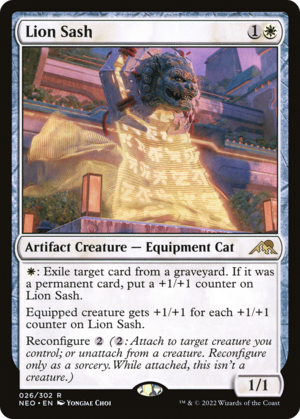
Card Details
Lion Sash #26 Artifact Creature — Equipment Cat
Info
| Color: | |
| Identifies: | |
| Cost: |
|
| Rarity: | Rare |
| Converted Cost: | 2 |
| Power/Toughness: | 1/1 |
| Types: | |
| SubTypes: | |
| Languages: |
|
| Layout: | Normal |
| Rank: | |
| Saltiness: |
Abilities/Keywords
Rules
Prices
Legalities
Brawl
Paupercommander
Predh
Standardbrawl
Vintage
Gladiator
Premodern
Oathbreaker
Duel
Pauper
Modern
Alchemy
Future
Timeless
Historic
Oldschool
Penny
Commander
Legacy
Standard
Pioneer
Text
: Exile target card from a graveyard. If it was a permanent card, put a +1/+1counteron this permanent.
Equipped creature gets +1/+1 for each +1/+1counteron this Equipment.
Reconfigure (: Attach to target creature you control; or unattach from a creature. Reconfigure only as a sorcery. While attached, this isn't a creature.) 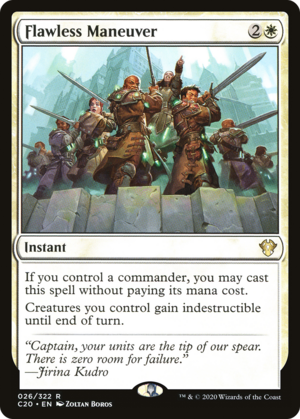
Card Details
Flawless Maneuver #26 Instant
Info
| Color: | |
| Identifies: | |
| Cost: |
|
| Rarity: | Rare |
| Converted Cost: | 3 |
| Power/Toughness: | / |
| Types: | |
| SubTypes: | |
| Languages: |
|
| Layout: | Normal |
| Rank: | |
| Saltiness: |
Rules
Text
If you control a commander, you may cast this spell without paying its mana cost. Creatures you control gain indestructible until end of turn.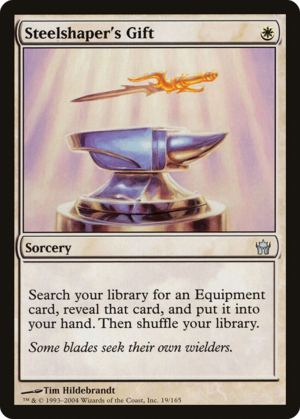
Card Details
Steelshaper's Gift #19 Sorcery
Info
| Color: | |
| Identifies: | |
| Cost: |
|
| Rarity: | Uncommon |
| Converted Cost: | 1 |
| Power/Toughness: | / |
| Types: | |
| SubTypes: | |
| Languages: |
|
| Layout: | Normal |
| Rank: | |
| Saltiness: |
Rules
Prices
Legalities
Brawl
Paupercommander
Predh
Standardbrawl
Vintage
Gladiator
Premodern
Oathbreaker
Duel
Pauper
Modern
Alchemy
Future
Timeless
Historic
Oldschool
Penny
Commander
Legacy
Standard
Pioneer
Text
Search your library for an Equipment card, reveal that card, put it into your hand, thenshuffle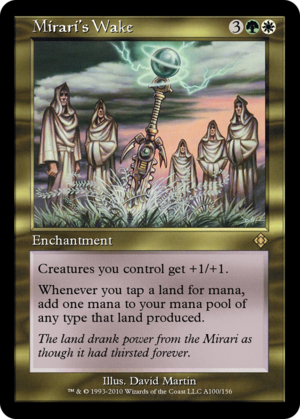
Card Details
Mirari's Wake #A100 Enchantment
Info
| Color: | |
| Identifies: | |
| Cost: |
|
| Rarity: | Rare |
| Converted Cost: | 5 |
| Power/Toughness: | / |
| Types: | |
| SubTypes: | |
| Languages: |
|
| Layout: | Normal |
| Rank: | |
| Saltiness: |
Rules
Prices
| Seller | Price |
|---|
Legalities
Brawl
Paupercommander
Predh
Standardbrawl
Vintage
Gladiator
Premodern
Oathbreaker
Duel
Pauper
Modern
Alchemy
Future
Timeless
Historic
Oldschool
Penny
Commander
Legacy
Standard
Pioneer
Text
Creatures you control get +1/+1. Whenever you tap a land for mana, add one mana of any type that land produced.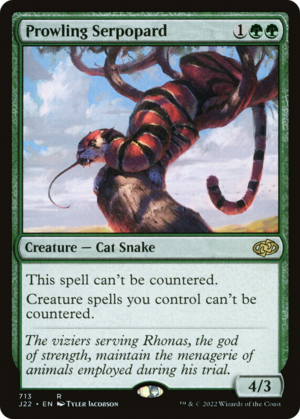
Card Details
Prowling Serpopard #713 Creature — Cat Snake
Info
| Color: | |
| Identifies: | |
| Cost: |
|
| Rarity: | Rare |
| Converted Cost: | 3 |
| Power/Toughness: | 4/3 |
| Types: | |
| SubTypes: | |
| Languages: |
|
| Layout: | Normal |
| Rank: | |
| Saltiness: |
Rules
Text
This spell can't be countered. Creature spells you control can't be countered.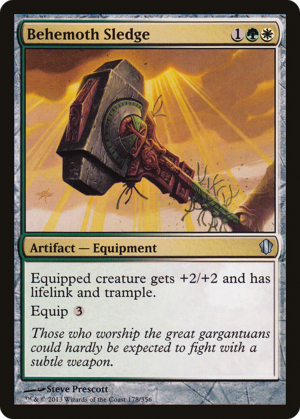
Card Details
Behemoth Sledge #178 Artifact — Equipment
Info
| Color: | |
| Identifies: | |
| Cost: |
|
| Rarity: | Uncommon |
| Converted Cost: | 3 |
| Power/Toughness: | / |
| Types: | |
| SubTypes: | |
| Languages: |
|
| Layout: | Normal |
| Rank: | |
| Saltiness: |
Abilities/Keywords
Rules
Text
Equipped creature gets +2/+2 and has trample and lifelink. Equip 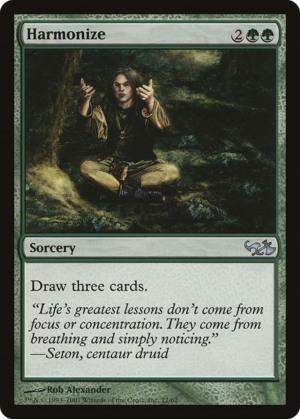
Card Details
Harmonize #22 Sorcery
Info
| Color: | |
| Identifies: | |
| Cost: |
|
| Rarity: | Uncommon |
| Converted Cost: | 4 |
| Power/Toughness: | / |
| Types: | |
| SubTypes: | |
| Languages: |
|
| Layout: | Normal |
| Rank: | |
| Saltiness: |
Rules
Text
Draw three cards.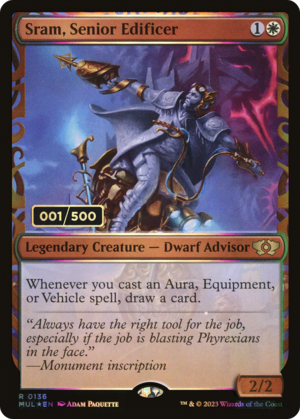
Card Details
Sram, Senior Edificer #136z Legendary Creature — Dwarf Advisor
Info
| Color: | |
| Identifies: | |
| Cost: |
|
| Rarity: | Rare |
| Converted Cost: | 2 |
| Power/Toughness: | 2/2 |
| Types: | |
| SubTypes: | |
| Languages: |
|
| Layout: | Normal |
| Rank: | |
| Saltiness: |
Rules
Prices
| Seller | Price |
|---|---|
| Tcgplayer | 412.5 USD |
| Cardmarket | 123.07 EUR |
Legalities
Brawl
Paupercommander
Predh
Standardbrawl
Vintage
Gladiator
Premodern
Oathbreaker
Duel
Pauper
Modern
Alchemy
Future
Timeless
Historic
Oldschool
Penny
Commander
Legacy
Standard
Pioneer
Text
Whenever you cast an Aura, Equipment, or Vehicle spell, draw a card.
Card Details
Farseek #725 Sorcery
Info
| Color: | |
| Identifies: | |
| Cost: |
|
| Rarity: | Common |
| Converted Cost: | 2 |
| Power/Toughness: | / |
| Types: | |
| SubTypes: | |
| Languages: |
|
| Layout: | Normal |
| Rank: | |
| Saltiness: |
Rules
Text
Search your library for a Plains, Island, Swamp, or Mountain card, put it onto the battlefield tapped, thenshuffle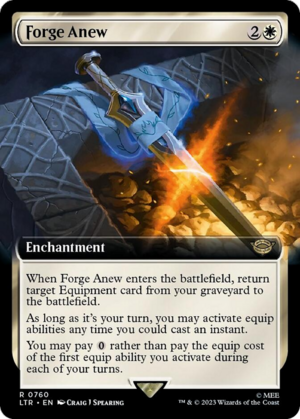
Card Details
Forge Anew #760 Enchantment
Info
| Color: | |
| Identifies: | |
| Cost: |
|
| Rarity: | Rare |
| Converted Cost: | 3 |
| Power/Toughness: | / |
| Types: | |
| SubTypes: | |
| Languages: |
|
| Layout: | Normal |
| Rank: | |
| Saltiness: |
Rules
Text
When this enchantment enters, return target Equipment card from your graveyard to the battlefield. During your turn, you may activate equip abilities any time you could cast an instant. You may pay rather than pay the equip cost of the first equip ability you activate during each of your turns. 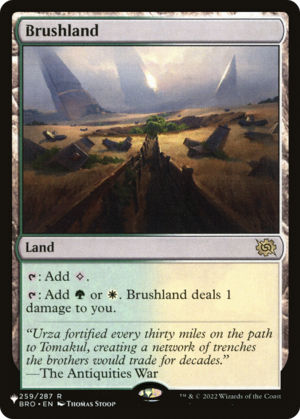
Card Details
Brushland #BRO-259 Land
Info
| Color: | |
| Identifies: | |
| Cost: | |
| Rarity: | Rare |
| Converted Cost: | 0 |
| Power/Toughness: | / |
| Types: | |
| SubTypes: | |
| Languages: |
|
| Layout: | Normal |
| Rank: | |
| Saltiness: |
Rules
Text
: Add .
: Add or . This land deals 1 damage to you. 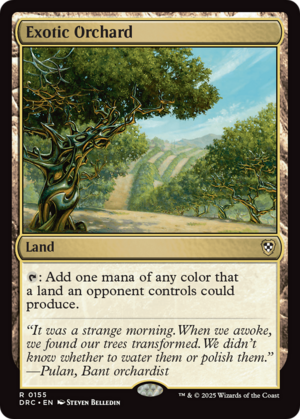
Card Details
Exotic Orchard #155 Land
Info
| Color: | |
| Identifies: | |
| Cost: | |
| Rarity: | Rare |
| Converted Cost: | 0 |
| Power/Toughness: | / |
| Types: | |
| SubTypes: | |
| Languages: |
|
| Layout: | Normal |
| Rank: | |
| Saltiness: |
Rules
Text
: Add one mana of any color that a land an opponent controls could produce. 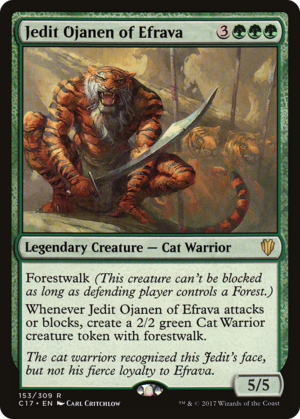
Card Details
Jedit Ojanen of Efrava #153 Legendary Creature — Cat Warrior
Info
| Color: | |
| Identifies: | |
| Cost: |
|
| Rarity: | Rare |
| Converted Cost: | 6 |
| Power/Toughness: | 5/5 |
| Types: | |
| SubTypes: | |
| Languages: |
|
| Layout: | Normal |
| Rank: | |
| Saltiness: | |
| Tokens: |
Abilities/Keywords
Rules
Text
Forestwalk (This creature can't be blocked as long as defending player controls a Forest.) Whenever Jedit Ojanen attacks or blocks, create a 2/2 green Cat Warrior creature token with forestwalk.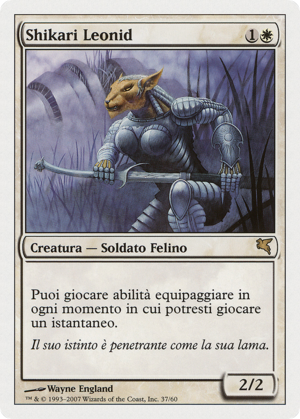
Card Details
Leonin Shikari #L37 Creature — Cat Soldier
Info
| Color: | |
| Identifies: | |
| Cost: |
|
| Rarity: | Rare |
| Converted Cost: | 2 |
| Power/Toughness: | 2/2 |
| Types: | |
| SubTypes: | |
| Languages: |
|
| Layout: | Normal |
| Rank: | |
| Saltiness: |
Rules
Prices
| Seller | Price |
|---|---|
| Cardmarket | 1.43 EUR |
Legalities
Brawl
Paupercommander
Predh
Standardbrawl
Vintage
Gladiator
Premodern
Oathbreaker
Duel
Pauper
Modern
Alchemy
Future
Timeless
Historic
Oldschool
Penny
Commander
Legacy
Standard
Pioneer
Text
You may activate equip abilities any time you could cast an instant.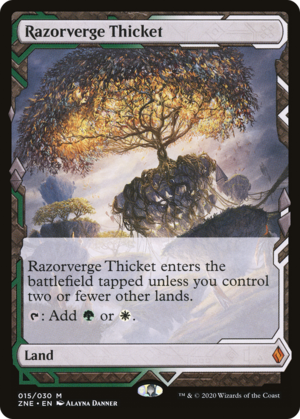
Card Details
Razorverge Thicket #15 Land
Info
| Color: | |
| Identifies: | |
| Cost: | |
| Rarity: | Mythic |
| Converted Cost: | 0 |
| Power/Toughness: | / |
| Types: | |
| SubTypes: | |
| Languages: |
|
| Layout: | Normal |
| Rank: | |
| Saltiness: |
Rules
Prices
Legalities
Brawl
Paupercommander
Predh
Standardbrawl
Vintage
Gladiator
Premodern
Oathbreaker
Duel
Pauper
Modern
Alchemy
Future
Timeless
Historic
Oldschool
Penny
Commander
Legacy
Standard
Pioneer
Text
This land enters tapped unless you control two or fewer other lands.: Add or . 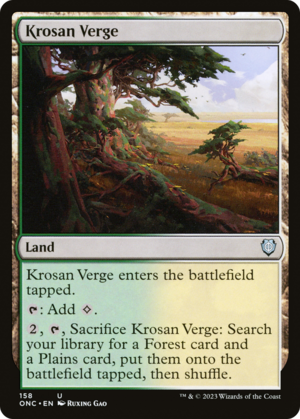
Card Details
Krosan Verge #158 Land
Info
| Color: | |
| Identifies: | |
| Cost: | |
| Rarity: | Uncommon |
| Converted Cost: | 0 |
| Power/Toughness: | / |
| Types: | |
| SubTypes: | |
| Languages: |
|
| Layout: | Normal |
| Rank: | |
| Saltiness: |
Rules
Text
This land enters tapped.: Add .
, ,Sacrificethis land: Search your library for a Forest card and a Plains card, put them onto the battlefield tapped, thenshuffle 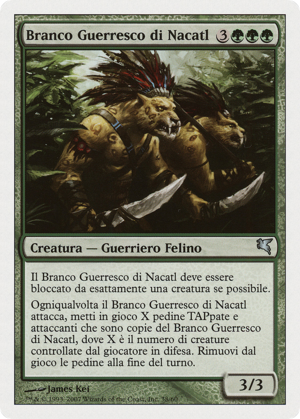
Card Details
Nacatl War-Pride #L38 Creature — Cat Warrior
Info
| Color: | |
| Identifies: | |
| Cost: |
|
| Rarity: | Uncommon |
| Converted Cost: | 6 |
| Power/Toughness: | 3/3 |
| Types: | |
| SubTypes: | |
| Languages: |
|
| Layout: | Normal |
| Rank: | |
| Saltiness: | |
| Tokens: |
Rules
Prices
| Seller | Price |
|---|---|
| Cardmarket | 0.9 EUR |
Legalities
Brawl
Paupercommander
Predh
Standardbrawl
Vintage
Gladiator
Premodern
Oathbreaker
Duel
Pauper
Modern
Alchemy
Future
Timeless
Historic
Oldschool
Penny
Commander
Legacy
Standard
Pioneer
Text
This creature must be blocked by exactly one creature if able. Whenever this creature attacks, create X tokens that are copies of it and that are tapped and attacking, where X is the number of creatures defending player controls. Exile the tokens at the beginning of the next end step.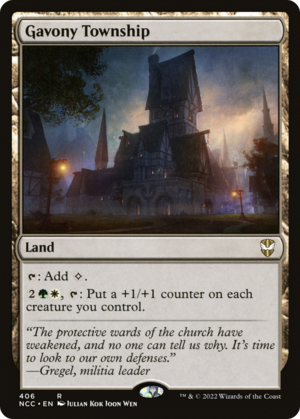
Card Details
Gavony Township #406 Land
Info
| Color: | |
| Identifies: | |
| Cost: | |
| Rarity: | Rare |
| Converted Cost: | 0 |
| Power/Toughness: | / |
| Types: | |
| SubTypes: | |
| Languages: |
|
| Layout: | Normal |
| Rank: | |
| Saltiness: |
Rules
Text
: Add .
, : Put a +1/+1counteron each creature you control. 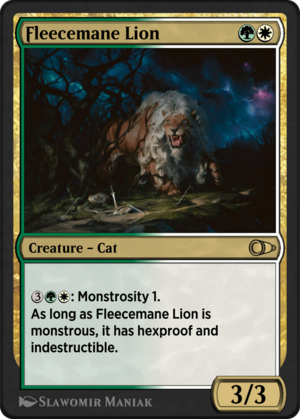
Card Details
Fleecemane Lion #224 Creature — Cat
Info
| Color: | |
| Identifies: | |
| Cost: |
|
| Rarity: | Rare |
| Converted Cost: | 2 |
| Power/Toughness: | 3/3 |
| Types: | |
| SubTypes: | |
| Languages: |
|
| Layout: | Normal |
| Rank: | |
| Saltiness: |
Abilities/Keywords
Rules
Prices
| Seller | Price |
|---|
Legalities
Brawl
Paupercommander
Predh
Standardbrawl
Vintage
Gladiator
Premodern
Oathbreaker
Duel
Pauper
Modern
Alchemy
Future
Timeless
Historic
Oldschool
Penny
Commander
Legacy
Standard
Pioneer
Text
: Monstrosity 1. (If this creature isn't monstrous, put a +1/+1counteron it and it becomes monstrous.)
As long as this creature is monstrous, it has hexproof and indestructible. 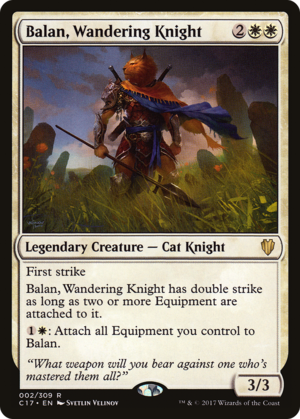
Card Details
Balan, Wandering Knight #2 Legendary Creature — Cat Knight
Info
| Color: | |
| Identifies: | |
| Cost: |
|
| Rarity: | Rare |
| Converted Cost: | 4 |
| Power/Toughness: | 3/3 |
| Types: | |
| SubTypes: | |
| Languages: |
|
| Layout: | Normal |
| Rank: | |
| Saltiness: |
Abilities/Keywords
Rules
Text
First strike Balan has double strike as long as two or more Equipment are attached to it.: Attach all Equipment you control to Balan. 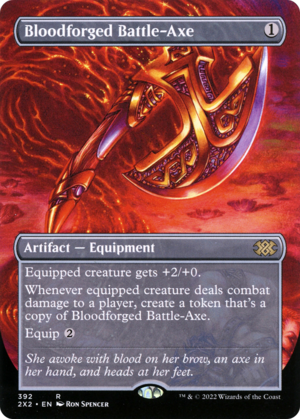
Card Details
Bloodforged Battle-Axe #392 Artifact — Equipment
Info
| Color: | |
| Identifies: | |
| Cost: |
|
| Rarity: | Rare |
| Converted Cost: | 1 |
| Power/Toughness: | / |
| Types: | |
| SubTypes: | |
| Languages: |
|
| Layout: | Normal |
| Rank: | |
| Saltiness: | |
| Tokens: |
Abilities/Keywords
Rules
Prices
Legalities
Brawl
Paupercommander
Predh
Standardbrawl
Vintage
Gladiator
Premodern
Oathbreaker
Duel
Pauper
Modern
Alchemy
Future
Timeless
Historic
Oldschool
Penny
Commander
Legacy
Standard
Pioneer
Text
Equipped creature gets +2/+0. Whenever equipped creature deals combat damage to a player, create a token that's a copy of this Equipment. Equip 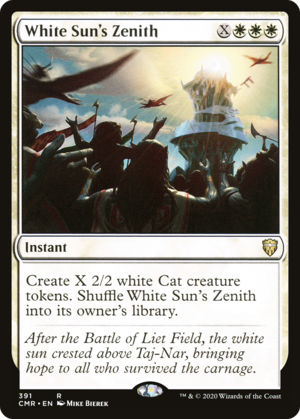
Card Details
White Sun's Zenith #391 Instant
Info
| Color: | |
| Identifies: | |
| Cost: |
 |
| Rarity: | Rare |
| Converted Cost: | 3 |
| Power/Toughness: | / |
| Types: | |
| SubTypes: | |
| Languages: |
|
| Layout: | Normal |
| Rank: | |
| Saltiness: | |
| Tokens: |
Rules
Text
Create X 2/2 white Cat creature tokens.ShuffleWhite Sun's Zenith into its owner's library.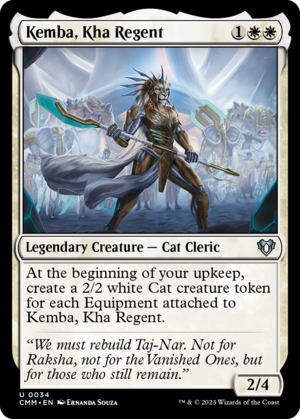
Card Details
Kemba, Kha Regent #34 Legendary Creature — Cat Cleric
Info
| Color: | |
| Identifies: | |
| Cost: |
|
| Rarity: | Uncommon |
| Converted Cost: | 3 |
| Power/Toughness: | 2/4 |
| Types: | |
| SubTypes: | |
| Languages: |
|
| Layout: | Normal |
| Rank: | |
| Saltiness: | |
| Tokens: |
Rules
Prices
Legalities
Brawl
Paupercommander
Predh
Standardbrawl
Vintage
Gladiator
Premodern
Oathbreaker
Duel
Pauper
Modern
Alchemy
Future
Timeless
Historic
Oldschool
Penny
Commander
Legacy
Standard
Pioneer
Text
At the beginning of your upkeep, create a 2/2 white Cat creature token for each Equipment attached to Kemba.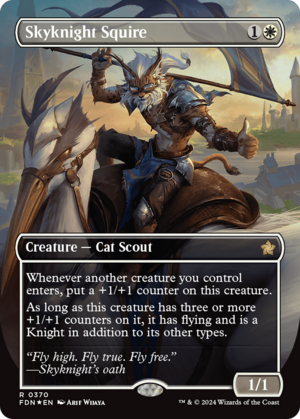
Card Details
Skyknight Squire #370 Creature — Cat Scout
Info
| Color: | |
| Identifies: | |
| Cost: |
|
| Rarity: | Rare |
| Converted Cost: | 2 |
| Power/Toughness: | 1/1 |
| Types: | |
| SubTypes: | |
| Languages: |
|
| Layout: | Normal |
| Rank: | |
| Saltiness: |
Rules
Text
Whenever another creature you control enters, put a +1/+1counteron this creature. As long as this creature has three or more +1/+1 counters on it, it has flying and is a Knight in addition to its other types.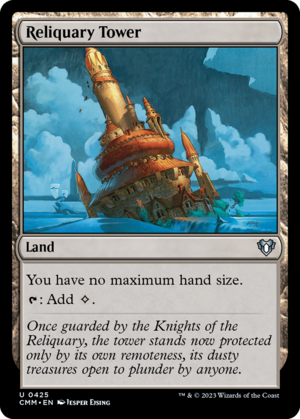
Card Details
Reliquary Tower #425 Land
Info
| Color: | |
| Identifies: | |
| Cost: | |
| Rarity: | Uncommon |
| Converted Cost: | 0 |
| Power/Toughness: | / |
| Types: | |
| SubTypes: | |
| Languages: |
|
| Layout: | Normal |
| Rank: | |
| Saltiness: |
Rules
Prices
Legalities
Brawl
Paupercommander
Predh
Standardbrawl
Vintage
Gladiator
Premodern
Oathbreaker
Duel
Pauper
Modern
Alchemy
Future
Timeless
Historic
Oldschool
Penny
Commander
Legacy
Standard
Pioneer
Text
You have no maximum hand size.: Add . 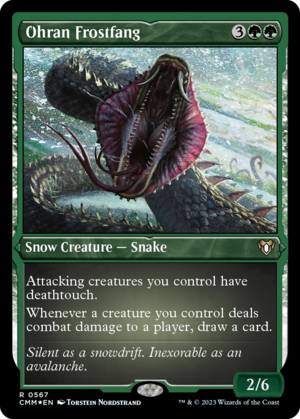
Card Details
Ohran Frostfang #567 Snow Creature — Snake
Info
| Color: | |
| Identifies: | |
| Cost: |
|
| Rarity: | Rare |
| Converted Cost: | 5 |
| Power/Toughness: | 2/6 |
| Types: | |
| SubTypes: | |
| Languages: |
|
| Layout: | Normal |
| Rank: | |
| Saltiness: |
Rules
Prices
Legalities
Brawl
Paupercommander
Predh
Standardbrawl
Vintage
Gladiator
Premodern
Oathbreaker
Duel
Pauper
Modern
Alchemy
Future
Timeless
Historic
Oldschool
Penny
Commander
Legacy
Standard
Pioneer
Text
Attacking creatures you control have deathtouch. Whenever a creature you control deals combat damage to a player, draw a card.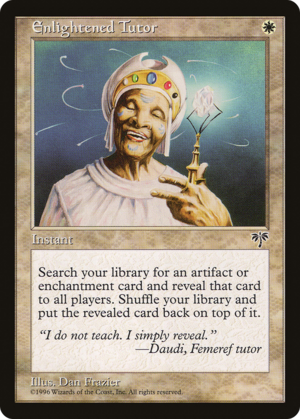
Card Details
Enlightened Tutor #14 Instant
Info
| Color: | |
| Identifies: | |
| Cost: |
|
| Rarity: | Uncommon |
| Converted Cost: | 1 |
| Power/Toughness: | / |
| Types: | |
| SubTypes: | |
| Languages: |
|
| Layout: | Normal |
| Rank: | |
| Saltiness: |